The need for data maturity to deliver AI success and data value in 2026
How can organizations maximize ROI from their data and underpin AI projects? We look at the stages of data maturity and how Chief Data Officers can move towards achieving data-centricity in 2026.
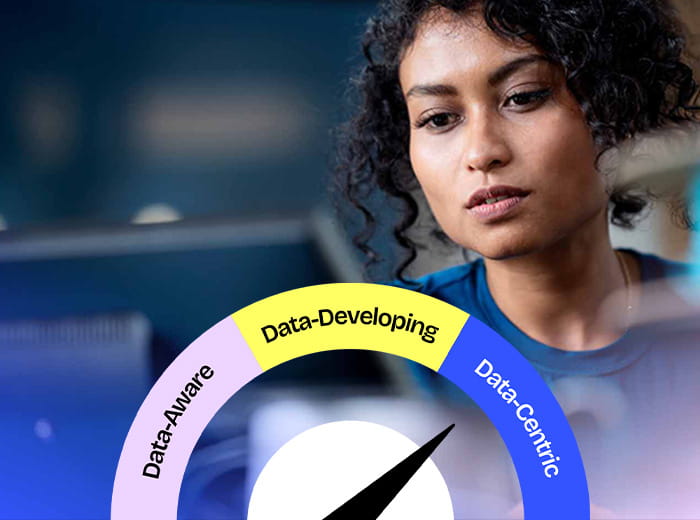
Becoming data-centric is essential if organizations are to create value from their data and successfully deploy AI. However, while Chief Data Officers (CDOs) and data leaders are investing heavily in data strategy, governance and tools, the majority are not yet fully mature.
Huwise’s 2026 Global Enterprise Data Maturity study found that 59% of organizations classed themselves as data-developing, but just 8% as fully data-centric. A third remained on the bottom rung of the data maturity ladder, solely being data-aware.
To help organizations move forward and turn their data into business value, our new report outlines the steps that CDOs need to take in 2026. This blog provides an overview of the challenges and opportunities CDOs face, based on that report.
Understanding the stages of data maturity
From our experience working with over 350 organizations over the last 14 years, we see three broad stages in how data is understood, inventoried and harnessed. Achieving maturity requires investment and dedicated resources to move from being data-aware, through data-developing to data-centric.
Key factors to focus on include:
- The level of senior and business-wide support for data programs
- Understanding of the data estate and what it contains
- Data quality and data governance to ensure data is usable and access is controlled
- Data availability for the entire business, without requiring employees to have specialist technical skills or support to use data in their working lives
- Data culture, with everyone committed to data-driven decision-making and innovation
- The right resources to support data-centricity, both through tools such as data product marketplaces, and skills and leadership within the data team
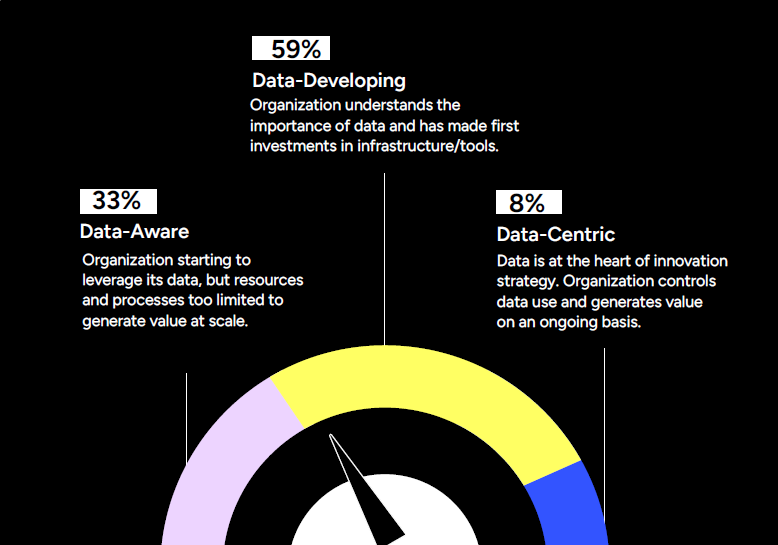
As our study found, while the majority of organizations recognize the importance of data maturity, they are still developing their strategies and capabilities. Even those that have become data-centric need to continue to invest and innovate – data maturity is a journey, not a destination.
Our report, Understanding organizational data maturity in 2026 outlines how organizations can move forward and put data at the heart of their business and AI strategies and operations.
The challenges to data maturity - and how to overcome them
Becoming data-centric requires organizations to have complete understanding of their data, be confident in its quality, and be able to make it seamlessly available across the business for both human employees and AI. Data needs to be trusted and accessible, whatever the technical skills or background of those using it.
The challenges highlighted by the study fall into three groups – data quality and tools, skills, and culture.
Data quality and tools
Respondents to the survey listed data quality as their number one challenge. If data is incomplete or poor quality, it will not deliver value. This is especially true when it comes to AI. Feeding agents or Large Language Models (LLMs) with unreliable data will produce skewed or biased results, leading to poor decision-making or actions that negatively impact the business.
As well as ensuring data is high-quality and well-governed it needs to be easily available to all. Data silos were the second biggest challenge highlighted by CDOs. This is worsened by complex data management stacks that are focused on technical tools, such as storage and cataloging. Only a quarter (26%) of organizations have deployed data product marketplaces that provide access to information for business users. And many of these simply centralize data, without providing an intuitive, self-service interface that encourages and accelerates consumption.
A lack of people and skills
Driven by AI, competition for data talent is intense. Being able to find the right people, with the right skills, is a key challenge for organizations. Demonstrating this, the data
team represented less than 1% of the workforce in over half (51%) of organizations in the study. That means that whatever the investment made in tools and processes, it is difficult to operationalize them effectively, holding back maturity.
Underdeveloped data culture
Data-centric organizations don’t just make data available – they embed it into everyone’s roles across the business. That means building trust and arming employees with the confidence to access and use data in their working lives. Creating a data culture that encourages use is vital. CDOs recognize this, listing employee training to create a data culture as their number one priority for 2026. However, only 42% have trained any employees in data usage and/or relevant tools, showing the need to do more to address cultural issues.
How a data product marketplace enables data-centricity
Moving from data-aware to data-centric is not a simple process. CDOs first need to have the data foundations in place with an understanding of their data landscape in terms of scope and quality, allied with strong governance processes. They then need to make it easy for humans and AI to securely access, consume, and generate value from reliable, trusted data, without requiring technical support or skills.
Data products, and data product marketplaces, are central to this transformation .Data products underpin data-centric organizations by providing easy to consume, business-focused data assets governed by data contracts. Making these and other data assets available through intuitive, self-service data product marketplaces democratizes data access and puts the right information in the hands of employees and AI. Demonstrating their importance, data products and data product marketplaces are highlighted by Gartner in its latest Hype Cycle Data Management as vital for meeting data sharing and consumption challenges,
Understand how to turn data into value and drive data-centricity by reading the Huwise 2026 Global Enterprise Data Maturity study.
Share this post:
Articles on the same topic:
About the author

Lauréline Saux is passionate about the democratization of data and its impact on society. Through the content she writes, she analyzes the trends and challenges that impact the world of data.
More articles