City of Bologna creates sustainable, transparent city with public data marketplace
average monthly API calls
average monthly downloads
datasets
Company profile
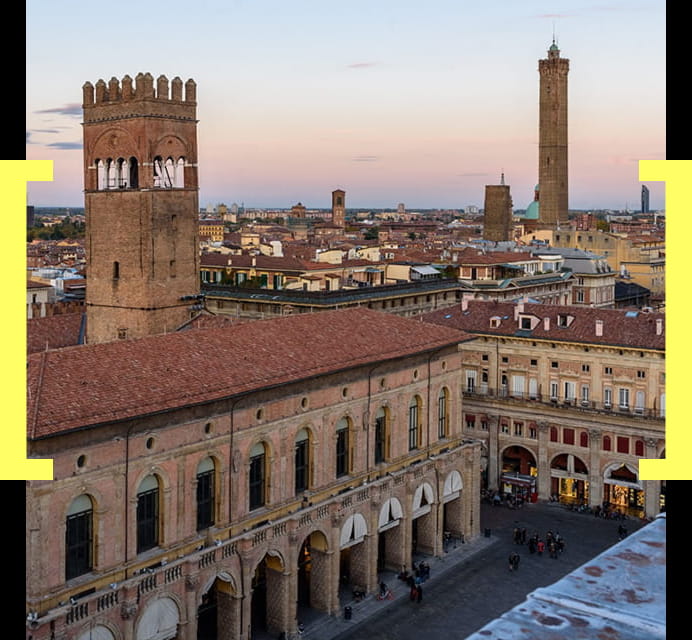
With nearly 400,000 inhabitants, Bologna is the seventh largest city in Italy. Its comune (municipality) is responsible for public administration in the city, including managing public services such as transport, waste collection, the environment, economic growth and public safety.
Sector
Local government
Location
Italy
Author

Challenge : Sharing data externally and internally
As a public body, Bologna’s comune is required to share a wide range of data with our stakeholders. Alongside this regulatory need, we are also focused on increasing transparency and collaboration and using data to improve decision-making. We have therefore adopted a unitary strategy focused on data sharing both externally and internally, helping drive digital transformation and underpinning the exchange of city information.
"We believe that data is an essential tool for the digital transformation of public administrations. Through its use, we can design the cities of the future, improve efficiency, and create a collaborative ecosystem that brings citizens and stakeholders closer to the administration."
Data experience: Seamlessly connecting users to data
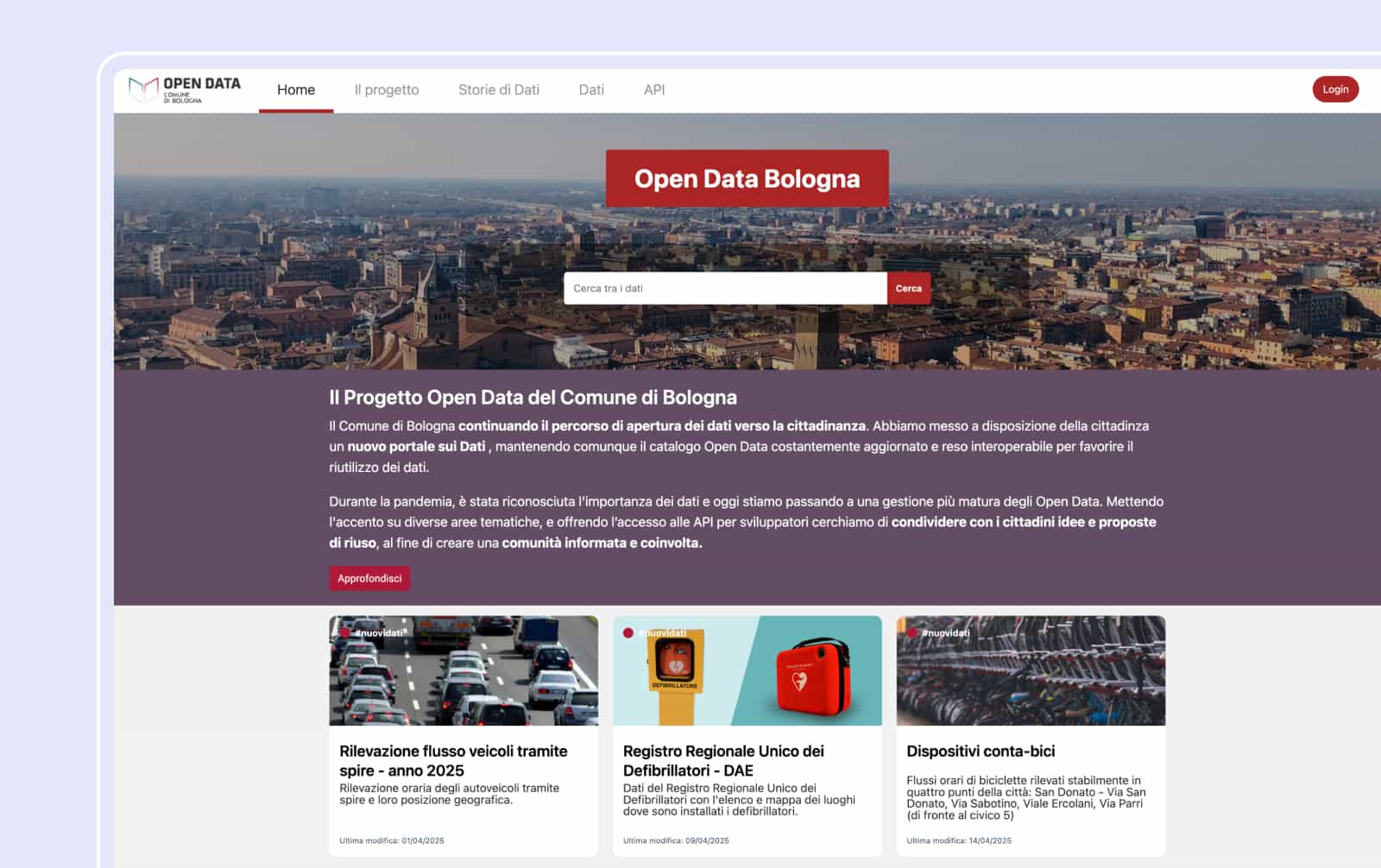
Launched in September 2020, the portal has now grown to offer a range of key data on Bologna, covering a wide range of themes, including mobility, infrastructure, the environment, tourism and arts and culture. Users cover a wide range of stakeholders, including residents, tourists, city employees, central government, researchers and the media. To ensure that data is easily accessible to all, the self-service portal includes a range of graphical visualizations to bring information to life for non-specialists, adding value and increasing consumption.
We have created a specific section featuring in-depth data stories and shorter “data pills” which introduce and explain new datasets to users. These are being continually enriched and added to.
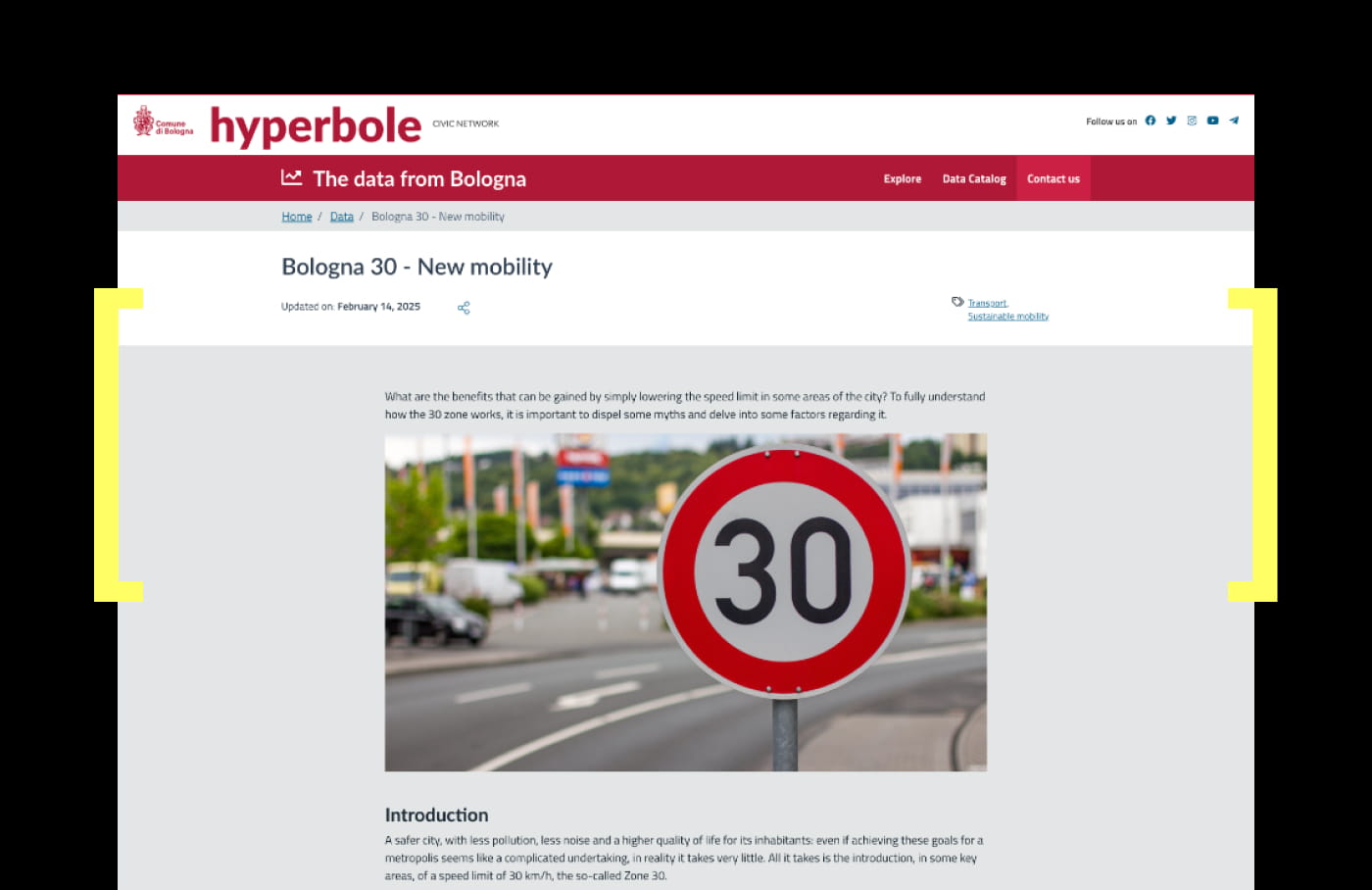
City 30 – showing the impact of policy making
To improve safety, and reduce pollution and traffic noise, Bologna introduced 30 km/h speed limits in major zones of the city in 2024. Results have been impressive – pedestrian deaths have fallen to zero, road accidents by 13%, and vehicle pollution by 29%, while use of bike sharing services has grown by 69%. To keep all stakeholders informed on the changes we are collecting and publishing data and data stories that analyze the project’s impact and share the results.
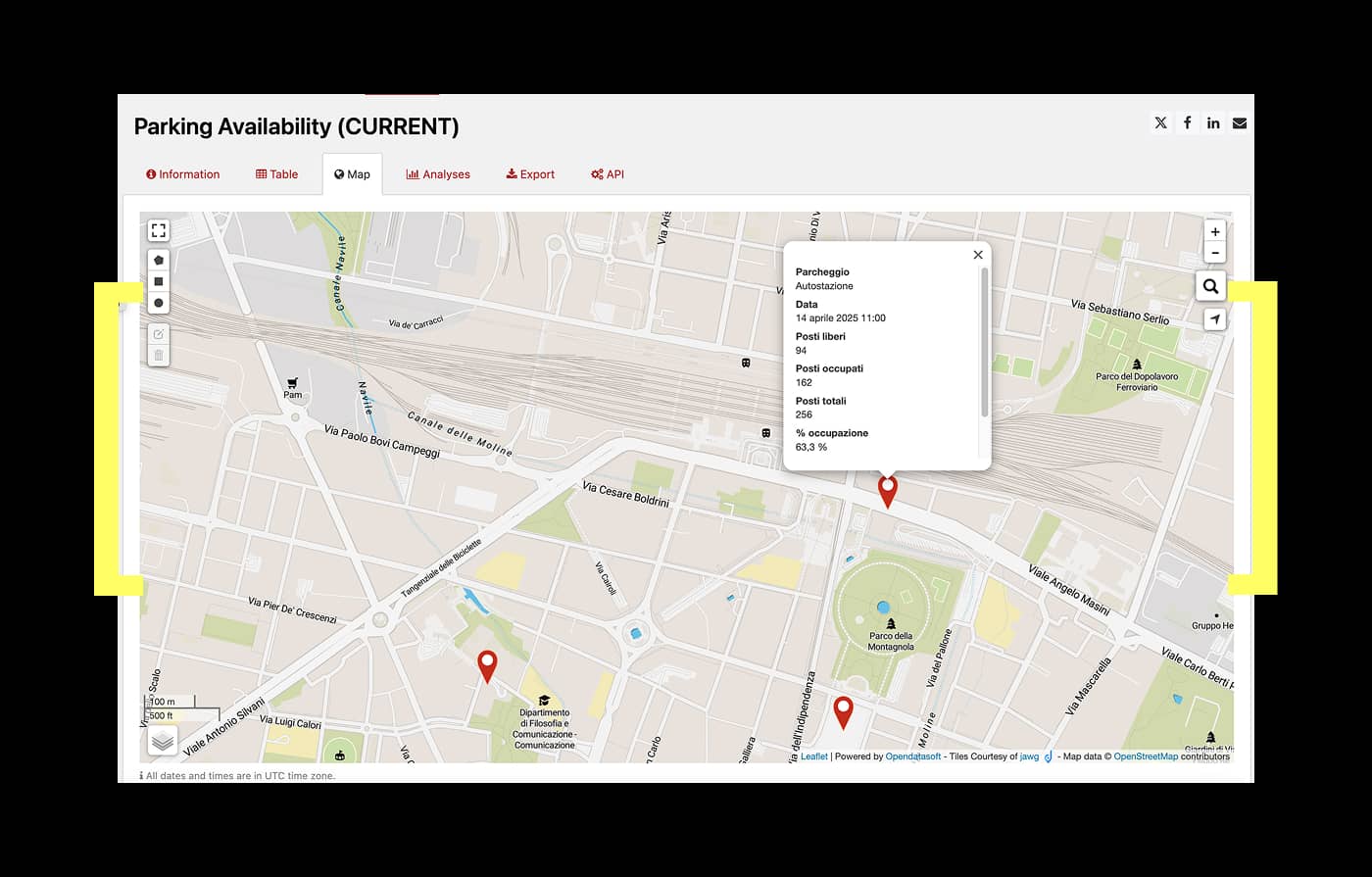
Improving mobility through data sharing
Mobility data is amongst the most popular on our data marketplace, including real-time information on parking availability, bus routes, and bike flows across the city. Data is collected from the city’s sensor networks, as well as via APIs from external partners (such as parking operators). It is then transformed, processed and published on the portal. This enables residents and visitors to locate free parking spaces, select bus routes, timetables and stops, and see which areas of the city are most popular for cycling.
In 2025 mobility data has been significantly extended through a network of traffic detection sensors that show hourly counts of vehicles at key points in the city, helping to monitor flows and links to air pollution.
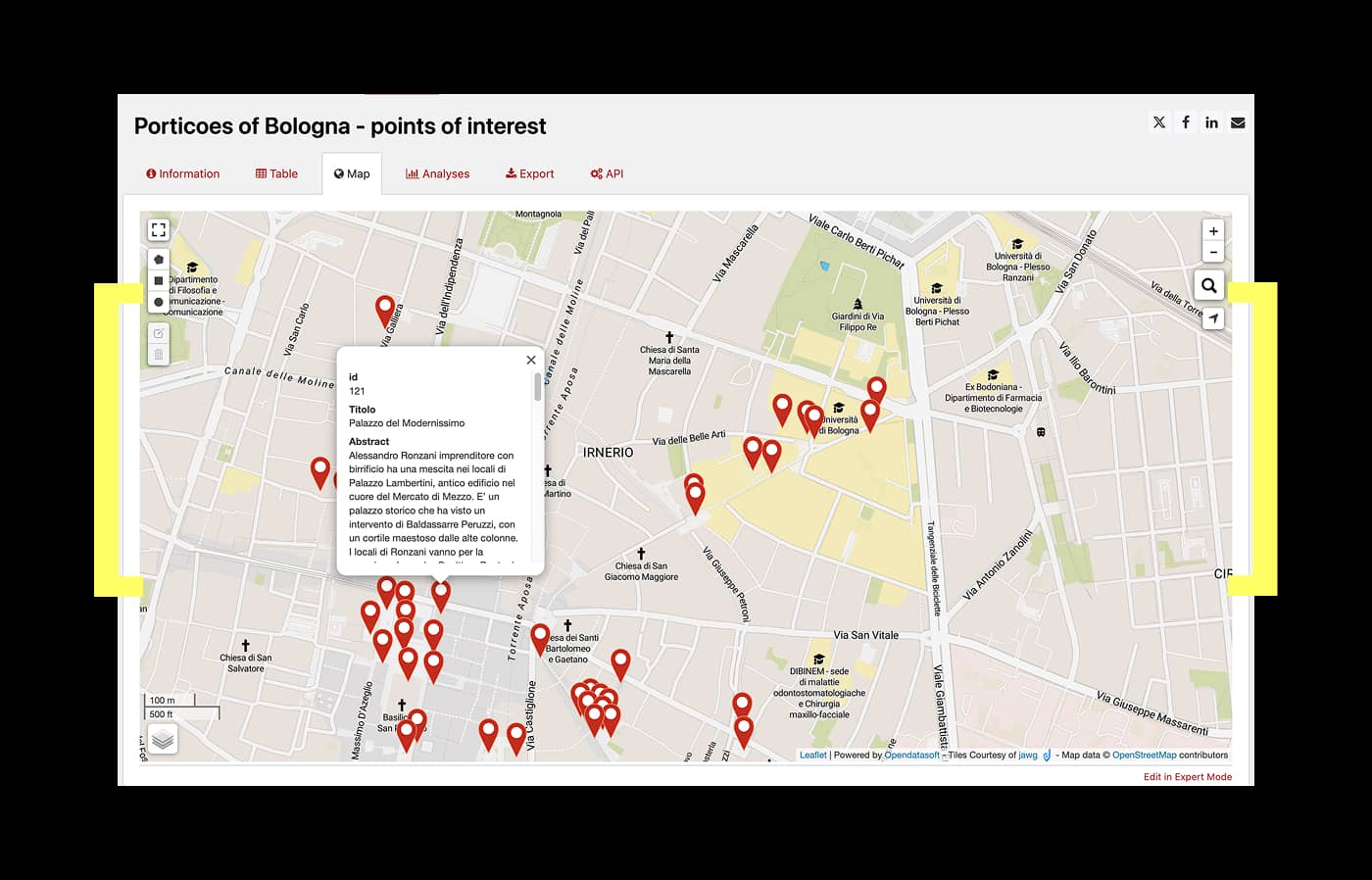
Encouraging participation in arts and culture
One of the most popular data stories focuses on Bologna’s series of historic porticos, which are a UNESCO World Heritage site. The data story explains their origins, illustrated with maps of their location, and other nearby points of interest, helping visitors to learn about and appreciate their unique charm. Additional datasets and stories focus on cultural attractions in the city, as well as major events, such as the 2024 visit of the Tour de France cycle race.
Powering Bologna’s digital twin
As a pioneer in sharing data, Bologna is now working to create a digital twin. This precise digital model of the city will be powered by data and information collected and centralized on the data marketplace, such as traffic monitoring and air quality datasets. Once launched, the digital twin will be capable of supporting better informed decision-making by city planners, policymakers and the wider ecosystem through advanced analysis and forecasting functions. These enable real-time simulations, optimized resource management, and greater overall urban sustainability, enabling increased collaboration and transparency, all while preserving data privacy.
Huwise:The data marketplace for data sharing at scale
Bologna’s successful data sharing strategy relies on three key capabilities of Opendatasoft’s solution:

Processors for automation and data quality
We collect information from a range of internal and external sensors and systems, and then use Huwise’s built-in processors to ensure consistent formatting and the highest standards of data quality for its 680+ data assets. The solution makes it easy for our team to format and standardize fields such as dates, correct text errors, and enrich with additional information, such as geographic and public datasets.

No-code programming options
As part of our mission to increase data consumption, the team at Bologna is constantly looking to create new visualizations, pages and data stories. We rely heavily on Huwise’s programming tools to quickly build, publish and maintain these visualizations, including the No-Code Studio, which is designed to simplify the creation of data stories, maps, dashboards, and KPI reports, along with the code editor capability which provides flexible, customizable options for designing pages.

Ability to customize the experience
The city has a wide range of stakeholders, from residents and businesses, to tourists and researchers. Each of these profiles has its own specific needs, and many are not data experts. By using Huwise we are able to fully customize the experience for different groups, such as through tailored pages, graphical data stories, powerful search, APIs and thematic navigation, which increases data consumption by all.
Results: Building a vibrant, sustainable city on data
Thanks to its data marketplace, Bologna is now delivering on its data strategy, with key benefits in three areas:
-
Greater transparency
Since it was launched over 32 million API calls have been made on the portal – an average of over 37,000 per month. It has grown to over 665 datasets and 13 data stories, which are also available on the city’s main website. By providing stakeholders with self-service access to key information, the city is increasing transparency around its activities. For example, by making the monitoring data and results of the City 30 speed limit project available, it is able to clearly show the positive impacts achieved.
-
Improved decision-making
Data is now available to use internally within the city administration as well as being shared with central government agencies and other stakeholders, such as researchers at the University of Bologna, who use traffic data for mobility studies. Employees are able to monitor and measure specific programs, such as efforts to increase the use of bikes, and evaluate the effects of current and future decisions. The digital twin will further extend capabilities to plan and improve decision-making moving forward.
-
Underpinning a sustainable future
Bologna has clear aims to become a healthier and more sustainable city. With data from air quality sensors shared via the portal, along with information on waste collection, green spaces and other environmental initiatives it is able to demonstrate progress towards its sustainability goals. Moving forward it is aiming to add datasets around energy use within the city to help support decarbonization and greater energy efficiency.

"Bologna’s success and ambitious plans for the future highlight the transformative impact that data sharing can have on cities. It has strengthened engagement with key stakeholders, underpinned key projects and increased collaboration, helping to build a dynamic, innovative city designed around community needs."
About the Author
Mirco Lacalandra
Digital Innovation and Data, Comune di Bologna
Mirco Lacalandra is a specialist in Digital Innovation and Data at the Comune di Bologna, where he plays a key role in the city’s technological evolution. His work is central to transforming Bologna into a premier Smart City, focusing on the strategic use of data to improve urban living and administrative efficiency.
Let’s talk [ data product marketplace ]
In just 30 minutes, discover how Huwise helps you create value for everyone across your organization. Book your personalized demo with one of our experts and let us explain more.
Request a demo