Why ecosystem data marketplaces matter for the UK’s energy transition
The energy sector is increasingly driven by data. As it shifts to a more decentralised, decarbonised ecosystem, how is data sharing changing and what role do ecosystem data marketplaces play? To find out we interviewed Yiu-Shing Pang of UK Power Networks.
The energy sector is in the midst of a fundamental transformation as it accelerates towards net zero. The shift from fossil fuels to renewable energy, the electrification of vehicles and industries, the increasing need to incorporate wind and solar generators, and new demands from customers such as data centres all require the fast exchange of trustworthy, interoperable data.
Driven by these new needs and regulatory changes, the UK energy sector has ambitious plans to increase data sharing and consumption across the wider ecosystem. To learn more about the latest updates and the importance of ecosystem data marketplaces we spoke to Yiu-Shing Pang, Data Sharing Manager at UK Power Networks and chair of the Energy Networks Association’s (ENA’s) Open Data working group.
Understanding the drivers for increased data sharing
UK Power Networks is the UK’s largest electricity distribution network, delivering power to 8.5 million homes and businesses across London, the east and the southeast of England. It serves over 19 million people, nearly 30% of Great Britain’s population, and its 190,000-kilometer network would roughly stretch halfway to the moon.
Yiu-Shing, can you explain the current data sharing landscape and how UK Power Networks is supporting its ecosystem?
Certainly. In 2023 our regulator, Ofgem, put in place guidelines to help accelerate data sharing by network operators with all their ecosystem stakeholders. These stakeholders include local councils, electricity generators, property developers, researchers and EV charging providers. Progress on sharing this open data is evaluated through technical appraisals and stakeholder surveys carried out by Ofgem, which incentivises good data sharing under the RIIO-ED2 price control.
While UK Power Networks was sharing open data before, this was ad-hoc and in different locations across our website. So, we deployed an intuitive, centralised, marketplace which allows our ecosystem completely free self-service access to our data products. Working with Huwise and through close engagement with our stakeholders, UK Power Networks has designed a marketplace experience that meets the needs of different audiences, from the most technical users (such as academics and developers looking to connect new generation assets), to those who are new to both data and the energy world, such as local authorities looking to accelerate their own decarbonisation.
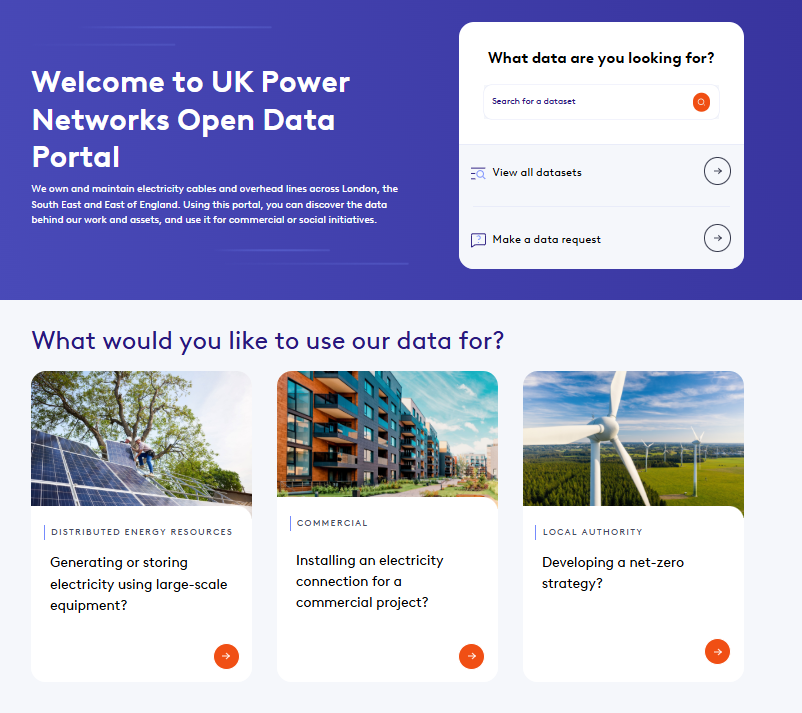
Since its launch it has grown to now contain over 130 datasets, made up of 22GB of data with 17,000 registered users. Data ranges from near-real time sources with a one minute refresh to static information. The marketplace has seen over 17,000 downloads and 8.38 million API calls since it went live.
How is this changing and what are the next steps?
Across the industry, sharing open data is increasingly mature. It is great to see the benefits that our stakeholders are getting. For example, a renewable generator can independently go onto the data marketplace and see where there is potential capacity on our network to connect a solar farm. This helps them speed up planning and makes the process more efficient for everyone.
We’re now looking to extend the range of data that we share. Rather than open data, which is freely available, much of this information is more sensitive and cannot be shared publicly. We can therefore share some restricted datasets with selected stakeholders, governed by specific agreements. But, at the very extreme end with personal or commercial data with legal and regulatory restrictions it cannot be shared with others at all. That’s why my job title has changed from Open Data Manager to Data Sharing Manager!
How is regulation driving this wider data sharing?
This expansion is being driven by a combination of legislation that impacts different parts of the ecosystem in different ways. For example, the Data (Use and Access) Act 2025 enables the creation of Smart Data Schemes where energy players make customer- or business-data available to the customer or authorised third parties. The aim is to support customer engagement by helping customers access the best energy deals for their needs and to help reduce usage and accelerate decarbonisation.
This requires a secure framework for trusted data sharing across the energy sector, which Ofgem appointed the National Energy System Operator (NESO) to deliver. NESO has now successfully piloted this framework and is now working with the electricity and gas industry, including UK Power Networks, to create a Minimum Viable Product (MVP).
The aim of the project is to be able to share ecosystem data through a trust-based framework, with consistent approaches to risk and tiered levels of data access. This would be based on specific needs – for example UK Power Networks would share relevant network outage data with companies, provide information on a limited basis to engineering consultancies, but share data in a more streamlined and automated manner with other Distribution System Operators (DSOs). Key to this is ensuring technical interoperability to automate access to data, while still protecting information through strict cybersecurity protocols.
How are you currently sharing higher-value data with specific stakeholders?
While we work with NESO to ensure interoperability, we are also helping our employees share relevant, higher-value data with their stakeholders across the ecosystem. In the same way that GDPR protects personal data and mandates how it is shared, we’re focusing on how employees can safely and compliantly share non-personal data, complying with the Utilities Act. We’re working with UK Power Networks’ Data Protection Officer so that any requests to share this type of information are passed to us, allowing us to deal with them at a legal and technical level. This means we can apply a well-governed, consistent and audited GDPR-compliant focus to data sharing, where we deliver information through a specific, secure link to relevant people.
How are ecosystem data sharing requirements changing?
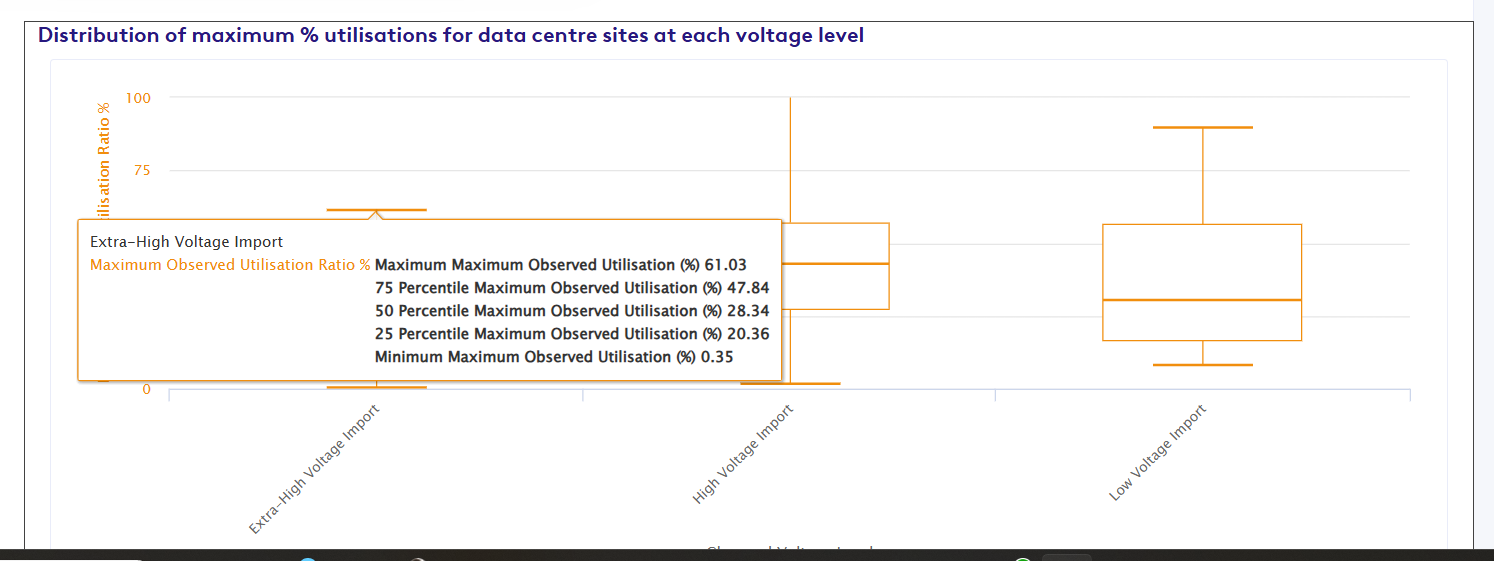
Previously, we’ve focused heavily on providing data to help people connect new generation sources, such as renewables. Now this data is available and being actively shared, we’re looking in more detail at the potential new demands on our network. Developers, particularly those building new data centres, want to be able to see what capacity is available, and if there are any future changes that might impact this. So, we’re increasing the availability of this information. We already publish a dataset that shows actual (anonymised) data centre consumption, as well as one that shows current applications for capacity.
Looking further ahead, do you expect new regulatory requirements around data sharing?
As an industry, our activities are driven by the price control regulations set by Ofgem. The next regulatory period begins in 2028, so we’re currently forward planning to see what is needed and in particular what the requirements for data, and data sharing, are.
Alongside this we’ll be heavily involved in NESO’s MVP, working with our colleagues from across the industry to help build this digitalised, secure, and efficient energy ecosystem data space and ensure scalable data sharing. Overall, this is a really exciting and busy time for data teams across the energy sector as we dramatically expand data sharing to drive greater efficiency and resilience, lower carbon emissions, and reduce costs to consumers.
Share this post:
Articles on the same topic:
About the author

Fanny Goldschmidt
At Huwise Fanny is responsible for sales to the European energy and utility sector, working with companies across the industry and helping them effectively share their data internally and externally with stakeholders in order to drive decarbonisation, increase efficiency, and meet regulatory requirements.
More articles